
Printing plays a vital role in how customers perceive your brand. Whether you’re producing product packaging, business cards, brochures, labels, shopping bags, or promotional materials, selecting the right printing technique directly impacts quality, cost, production speed, and overall customer satisfaction.
With several printing methods available, many businesses struggle to determine which option best suits their project. The right choice depends on factors such as order quantity, budget, material, color accuracy, finishing requirements, and turnaround time.
In this guide, we’ll explore the most common commercial printing techniques, their advantages, ideal applications, and how to select the perfect solution for your business.
A suitable printing process ensures:
Making the wrong choice can increase production costs, delay delivery, and compromise the quality of your final product.
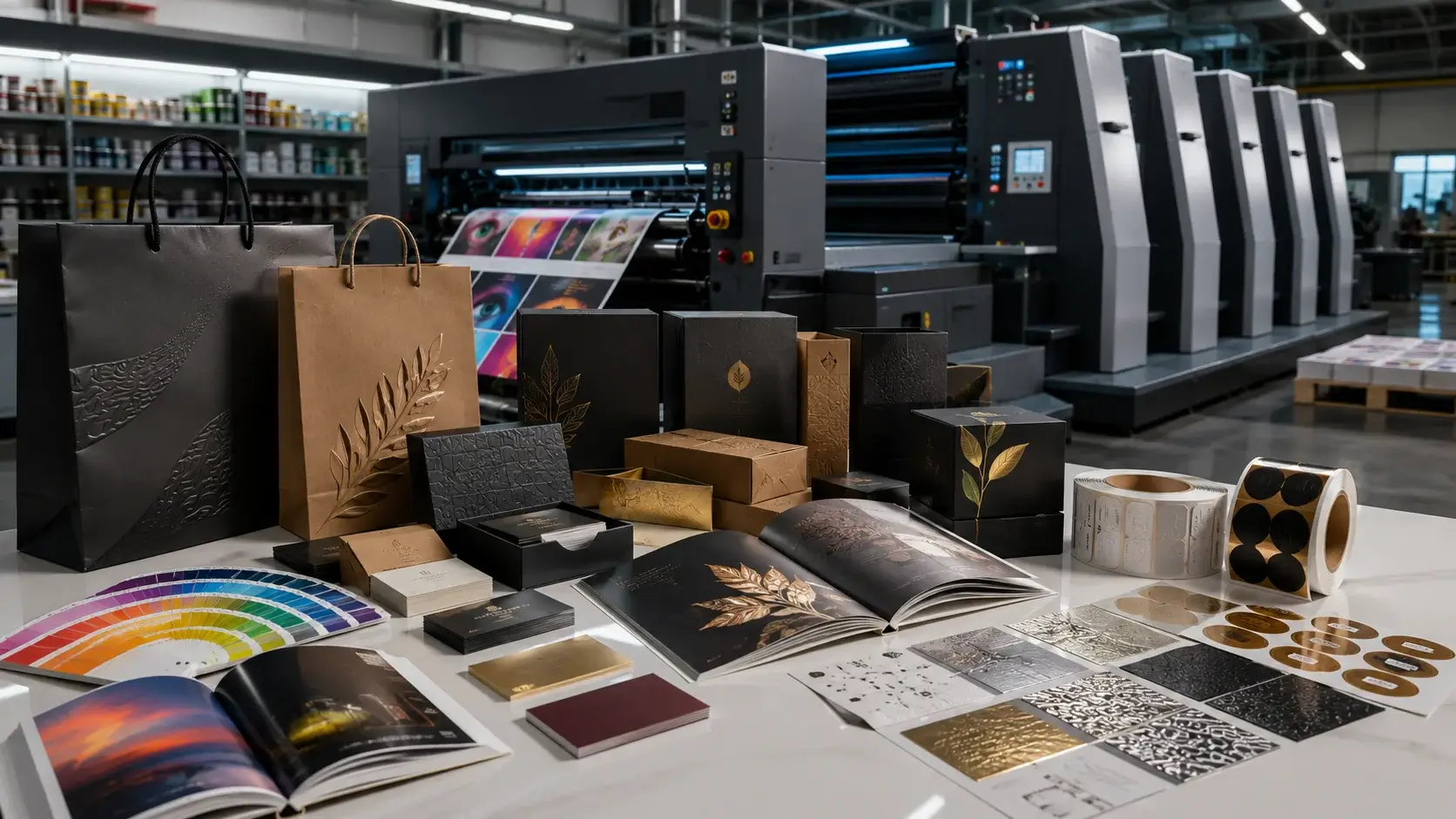
Offset printing is one of the most widely used commercial printing methods. It transfers ink from a printing plate onto a rubber blanket before applying it to paper or packaging material.
Best For:
Digital printing eliminates the need for printing plates, making it ideal for short production runs and personalized printing.
Best For:
Screen printing pushes ink through a mesh screen onto various surfaces.
Flexographic printing is commonly used for high-volume packaging production.
CMYK is the standard process used in commercial printing.
Suitable for:
Pantone colors provide exact brand color matching.
Best for:
Your printing results depend heavily on the material you choose.
Popular options include:
Each material offers unique strength, appearance, and finishing capabilities.
Professional finishing transforms ordinary printed products into premium marketing tools.
Popular finishing techniques include:
These enhancements improve durability while creating a luxurious appearance.
Before placing your order, ask yourself these important questions:
Different printing methods vary significantly in cost depending on quantity and complexity.
Small orders generally suit digital printing.
Large orders are usually more economical with offset printing.
Packaging material should match the weight, purpose, and protection requirements of your product.
Luxury products often benefit from foil stamping, embossing, or Spot UV.
Digital printing offers faster turnaround for urgent projects, while offset printing may require additional setup time.
At Prime Packages, we manufacture and print a wide variety of products, including:
Many businesses unknowingly make costly printing mistakes.
Reviewing artwork carefully before production helps avoid unnecessary delays and reprinting costs.
Prime Packages combines advanced printing technology with premium materials and expert craftsmanship to deliver outstanding results for businesses of all sizes.
Whether you need custom packaging boxes, premium labels, commercial printing, or branded shopping bags, our team ensures every project meets the highest standards of quality and precision.
Selecting the right printing technique is one of the most important decisions in any branding or packaging project. Understanding the strengths of offset, digital, screen, and flexographic printing helps businesses choose the most effective solution based on budget, quantity, quality, and production timelines.
By partnering with an experienced printing company, you can ensure your packaging and marketing materials not only look exceptional but also strengthen your brand identity and leave a lasting impression on your customers.
At Prime Packages, we’re committed to helping businesses achieve outstanding results through innovative printing solutions, premium materials, and unmatched attention to detail. Contact our team today to discuss your next project and receive a customized printing solution tailored to your business needs.
.